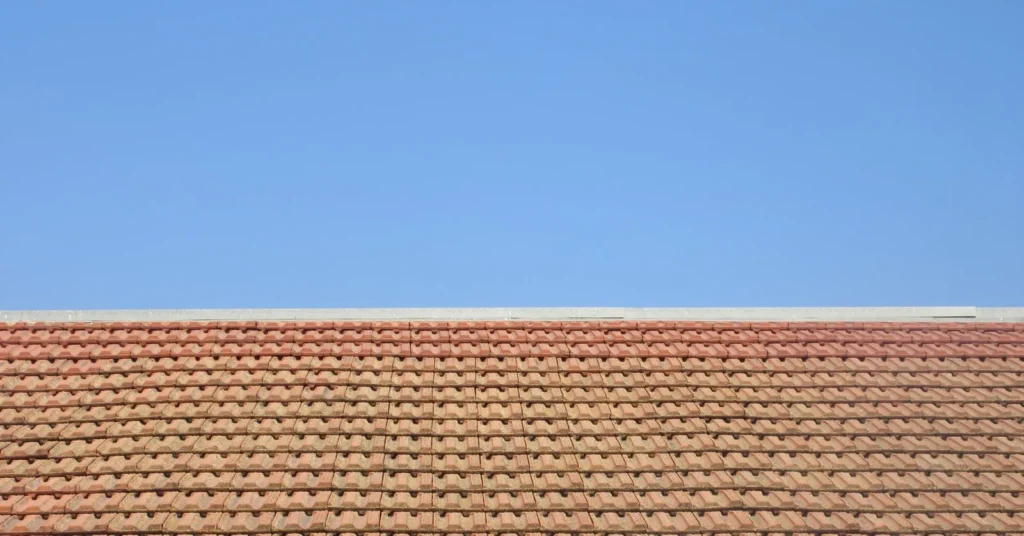
For most roofs in Wicklow, soft washing is the safer choice and pressure washing is the method we try to steer people away from. A pressure washer can strip the surface off concrete tiles, crack old slate, and force water up under the tiles where it has no business going. Soft washing uses low pressure and a biocide treatment to kill moss, algae and lichen at the root, which is gentler on the roof and actually lasts longer.
We get asked about this most weeks. Someone has had a quote from two different companies, one offering a “power wash” and one offering a “soft wash”, and the prices look similar on paper, so naturally they want to know what the difference actually is. It’s not a small one.
What goes wrong when pressure washing is used on a Wicklow roof
A lot of the roofing stock around here is older than people realise. Plenty of the period houses in Bray, Greystones and Wicklow town still have their original natural slate, and some of the farmhouses and cottages out past Rathdrum and Ashford do too. Natural slate is tough against weather but it’s brittle against impact and vibration. Blast it with a pressure washer at close range and you can crack slates that would otherwise have lasted another twenty or thirty years.
Newer estates built from the 1980s onward, the kind you see a lot of around Blessington and parts of Delgany, tend to have concrete tiles instead. These have a thin coloured sand coating on the surface. A pressure washer strips that coating straight off, taking the colour with it and leaving the tile underneath more porous and more prone to growing moss back faster than before. We’ve called out to roofs where a previous pressure wash job has left the tiles patchy grey, looking worse than when the moss was there.
There’s also the water itself. High pressure forces water sideways and upward under the tile laps, past the point the roof was ever designed to shed water from. On an older roof with worn felt underlay, that water finds its way into the attic. We’ve seen attic insulation damp and timber battens stained from jobs that were never done by us, where the homeowner only found out weeks later when a ceiling stain appeared.
Why soft washing is the method we use
Soft washing applies a biocide treatment at low pressure, low enough that it won’t disturb the tile or slate surface, but strong enough to actually kill the moss, lichen and algae rather than just blasting the visible growth off the top. The roots of moss sit down in the tile texture and in the joints between tiles. If you only remove what’s visible, it comes back within a year, sometimes faster on shaded or north facing roofs.
Killing it properly means it dies off gradually over the following weeks, and a lot of it washes away naturally in the rain rather than needing to be scraped or blasted off. That’s a gentler process from start to finish, and it’s the approach we use across the jobs we do for our roof cleaning customers throughout the county.
Where a roof has heavy, established moss growth, built up over years, sometimes thick enough that it’s holding tiles slightly apart, soft washing is paired with careful manual removal of the worst clumps before treatment. That’s really a job in its own right rather than a quick add-on, which is why we treat roof moss removal as a separate service for roofs that need it.
Why Wicklow roofs grow moss and algae so readily
Two things work against roofs here. The first is damp, mild weather for most of the year, which moss and algae thrive in. The second is the terrain. A lot of houses in places like Enniskerry, Kilcoole and the hillier parts around Rathdrum sit in the shade of trees or high ground for a good part of the day, especially on north facing roof slopes. Shade plus damp air is exactly what moss wants.
Coastal areas have their own version of the problem. Bray, Greystones and Wicklow town all get salt laden air coming straight off the sea, and that tends to encourage black algae streaking (sometimes called roof algae or “black stain”) on the tiles, particularly on the north or shaded elevations. It looks like dirt from the ground but it’s actually a living organism, which is exactly why pressure alone doesn’t solve it long term and a biocide treatment does.
Soft wash versus pressure wash, side by side
- Soft washing: Low pressure plus biocide treatment. Kills moss and algae at the root. Safe for slate, concrete tile and most roof coverings. Results last longer because the growth doesn’t return as quickly. Takes a little longer to show full results as treated growth dies back over following weeks.
- Pressure washing: High pressure water blast. Removes visible growth immediately but leaves roots behind. Can strip the coating off concrete tiles, crack slate, and force water under tiles into the roof structure. Growth tends to return faster since the roots survive.
If a roof cleaner’s main pitch is speed and instant visible results, ask directly what pressure they’re using and whether it’s a soft wash or a power wash. A straight answer should come easily, there’s no reason for a genuine tradesperson to dodge that question.
What decides the right approach for your roof
Every roof is a bit different, and the right method depends on a few things we check before quoting any job: the roof covering (natural slate, concrete tile, fibre cement), the age and condition of the roof, how much moss or algae has built up, and how exposed or shaded the roof is. A newly built house in Blessington with light surface algae needs a very different approach to a hundred year old slate roof in Wicklow town with heavy moss in the valleys.
We’ve been cleaning roofs across Wicklow for years, working on everything from coastal semis in Bray to farmhouses out past Ashford, and the pattern holds up everywhere: soft washing is the right default, and pressure washing is only ever appropriate on certain hard, non-porous surfaces, not on tiled or slated roofs. While we’re up there, it’s also worth having the gutters checked, since moss and granules washed down from the roof are one of the most common causes of blocked gutters we come across, and our gutter cleaning service is often done alongside a roof clean for that reason.
If you want a straight opinion on which method suits your own roof, and an honest answer if it’s not worth cleaning at all, have a look at our roof cleaning services or get in touch through our contact page and we’ll talk you through it before any work is booked.
Frequently Asked Questions
Is pressure washing ever okay on a roof?
It’s generally not something we’d recommend on tiled or slated roofs. It can be appropriate on certain hard, dense surfaces, but the risk of cracking slate, stripping tile coatings or forcing water under the roof covering is high enough that we avoid it as a general roof cleaning method.
How long does soft washing take to show results?
You’ll usually notice a visible colour change fairly quickly, but the full result builds over the following weeks as the treated moss and algae die back and wash away naturally in the rain. It’s a slower reveal than pressure washing but a more lasting one.
Will soft washing damage my gutters or plants below the roof?
A competent soft wash job is carried out carefully, with gutters protected or flushed afterwards and plant beds covered or rinsed down where needed. Ask whoever you’re hiring how they protect the area around the house before work starts.
My roof in a shaded part of Wicklow keeps getting moss back quickly. Why?
Shaded, damp spots, common on north facing roofs around Enniskerry, Rathdrum and similar areas, hold moisture longer and give moss ideal conditions. If moss keeps returning fast after a clean, it usually means the roots weren’t fully treated the first time, or the roof needs a proper moss removal job rather than a surface clean.
How do I know if I need roof cleaning or full moss removal?
Light surface algae or staining usually just needs a soft wash. If moss has built up thickly enough that it’s visible from the ground as raised clumps, or it’s sitting in the gaps between tiles, that’s a job for proper moss removal before any cleaning treatment is applied.
Does soft washing work on both slate and concrete tile roofs?
Yes, soft washing is suitable for both, which is part of why it’s the safer general choice. Pressure washing is far more likely to damage either surface, whereas a correctly mixed soft wash treatment is gentle enough for slate and concrete tile alike.