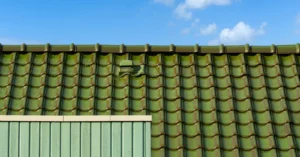

The clearest sign is moss sitting in clumps on the north facing slopes or in the valleys, usually noticeable from the road by the time it’s gotten this far. If you can see green or dark staining from your own driveway, the roof has needed attention for a while. Left alone, that moss holds water against the tiles or slates through every wet spell we get here, and in Wicklow that’s most of the year.
1. Moss building up on north facing slopes and valleys
This is the one we get called out for most. Wicklow has a lot of mature trees close to houses, especially around Enniskerry, Delgany and the older parts of Greystones, and shade plus damp air is exactly what moss needs to establish. North facing roof slopes dry out slower after rain, so moss takes hold there first, often years before the sunnier south facing slope shows anything. By the time it’s visible from the ground it’s usually been growing under the tile overlaps for a season or two already, which is the part homeowners don’t see.
The mistake we see most often is someone pressure washing it off themselves with a hired machine. It looks better for a few weeks, then comes back faster and thicker, because the high pressure strips the surface of the tile and roughens it, giving moss spores an even easier grip next time. A proper roof moss removal job uses a lower pressure approach with the right technique to actually remove growth without damaging the tile surface underneath.
2. Dark streaking or black algae on the roof face
Different problem to moss, and worth knowing the difference. Those black streaks running down from the ridge, usually most obvious on grey concrete tiles, are algae, and they’re common on roofs facing the prevailing weather here, particularly properties up around Blessington and Rathdrum that get the full force of westerly rain. It’s mostly cosmetic early on, but it does eat into the tile surface over time and it spreads. A roof covered in algae streaking also tends to hold moisture longer, which sets up the conditions for moss to follow.
3. Granules or grit collecting in gutters
If you clean your gutters and find a layer of gritty sand-like material at the bottom, that’s often tile or slate surface breaking down, sometimes accelerated by moss roots working into the material underneath. It can also just be normal weathering on older concrete tiles. Either way, it’s a sign the roof surface is under some stress and worth having looked at properly rather than just topping up the gutter clean and moving on. This is one of the things we check for whenever we’re doing gutter cleaning on a Wicklow property, because the gutters tell you a lot about what’s happening above them.
4. Gutters overflowing or blocked more often than they used to
A roof shedding moss sheds it straight into the gutters. We regularly find downpipes and gutter runs packed solid with moss that’s washed down off the roof during heavy rain, and that’s when you start seeing overflow marks on the fascia, damp patches on an exterior wall, or water finding its way behind the gutter during a storm. If your gutters are blocking up noticeably more often than in previous years, it’s rarely the gutters themselves that have changed. It’s usually what’s coming off the roof above them.
5. Slipped, cracked or lifted tiles you’ve noticed since a storm
Moss doesn’t just sit on the surface. Roots work their way under tile edges and into joints, and over time that lifts tiles slightly or holds enough extra weight and moisture that tiles crack or shift in high wind. Wicklow gets its share of exposed, elevated sites, around Rathdrum and the hills above Ashford especially, where wind loading on the roof is higher than in a sheltered town setting. If you’ve had tiles slip after a storm that didn’t seem that severe, moss build up underneath is worth ruling out as a contributing factor, not just the wind on its own.
Why ignoring moss actually shortens the roof’s life
This is the part that’s easy to underestimate because moss looks like a surface problem. It isn’t. Moss holds water against the tile constantly, not just during rain but for days afterward while it dries out slowly underneath the growth. That constant damp cycle is what causes concrete tiles to spall and crack, lets water track under tile overlaps into the roofing felt, and in older Wicklow housing stock with timber battens, can eventually lead to rot in the roof structure itself. None of that happens quickly. It happens gradually, over several winters, which is exactly why so many roofs we’re called to have moss that’s been building for years rather than months.
A roof cleaned every few years, with moss properly removed rather than just power washed, will reliably outlast one left to its own devices. It’s a cheaper job to do regularly than to deal with the tile replacement and felt repair that comes from leaving it too long.
What affects the cost of getting it sorted
- Roof pitch and access: steeper roofs and properties needing scaffolding rather than ladder access take longer and cost more.
- How established the moss is: light surface growth is quicker to treat than moss that’s built up thick clumps over several years.
- Roof size and number of valleys: more surface area and more junctions means more time on site.
- Tile or slate type: some surfaces need a gentler approach, which affects the method used and the time it takes.
- Whether gutters need clearing at the same time: often sensible to do together since moss washes straight into them anyway.
Because every roof is different, we’d always rather give an honest quote after actually looking at the job than guess a figure that doesn’t hold up once we’re on site.
Get it looked at before the worst of the winter weather
We’ve worked on roofs right across Wicklow, from Bray and Greystones down to Arklow and Wicklow town, and the pattern is always the same: the roofs that get attention every few years hold up far better than the ones left until there’s an obvious problem. If any of the signs above sound familiar, it’s worth getting it checked now rather than waiting for spring. Have a look at our full range of roof cleaning services or get in touch through our contact page for a quote specific to your roof.
Frequently Asked Questions
How often should a roof in Wicklow be cleaned?
It depends on how exposed the roof is to shade and damp, but many Wicklow properties benefit from a check every two to three years, with roofs near mature trees or in sheltered, damp spots sometimes needing attention sooner. Regular cleaning before moss gets established is always easier and less costly than dealing with heavy growth later.
Can I just pressure wash the moss off myself?
You can, but we’d steer you away from it. High pressure washing strips the protective surface off tiles and roughens them, which actually gives moss an easier grip next time round. It also risks dislodging tiles if you’re not used to working on a roof. A proper roof cleaning job uses a method that removes growth without damaging the tile.
Does moss on the roof actually cause leaks?
Not usually on its own straight away, but over time moss holds moisture against the tiles and can work its way under tile overlaps, which does eventually lead to water getting through to the felt and, on older roofs, to the timber underneath. It’s a slow process rather than a sudden one, which is why it so often gets left too long.
Will cleaning the roof damage my tiles?
Done properly, no. The risk comes from using the wrong method, particularly high pressure washing, rather than from cleaning itself. A gentler, more considered approach removes moss and algae without stripping the tile surface.
Do I need planning permission to have my roof cleaned?
No, routine roof cleaning and moss removal is maintenance, not a structural change, so it doesn’t typically raise planning questions. If your property is a protected structure or you’re ever unsure, it’s worth checking with your local authority directly.
Should I get my gutters cleaned at the same time as the roof?
It’s usually a good idea. Moss and debris from the roof wash straight down into the gutters, so having gutter cleaning done alongside the roof work means the whole system is dealt with in one visit rather than finding the gutters blocked again a few months later.